
If you’ve spent any time in Japan—or you’re preparing to move there—you’ve probably come across the word hanko. Maybe it appeared on a rental contract, a bank form, or a work document. Maybe a Japanese friend told you to get one before your appointment at city hall. Either way, you’re now wondering where to buy hanko in Japan, what it actually costs, and whether walking into a shop is even necessary in 2025.
This guide breaks it down clearly. You’ll see what a hanko is, where foreigners actually need one, what the in-store shopping experience looks like across Japan, and how ordering online compares when it comes to cost, speed, and quality. No vague advice, no recycled generalities—just what you actually need to know.
Quick Definitions
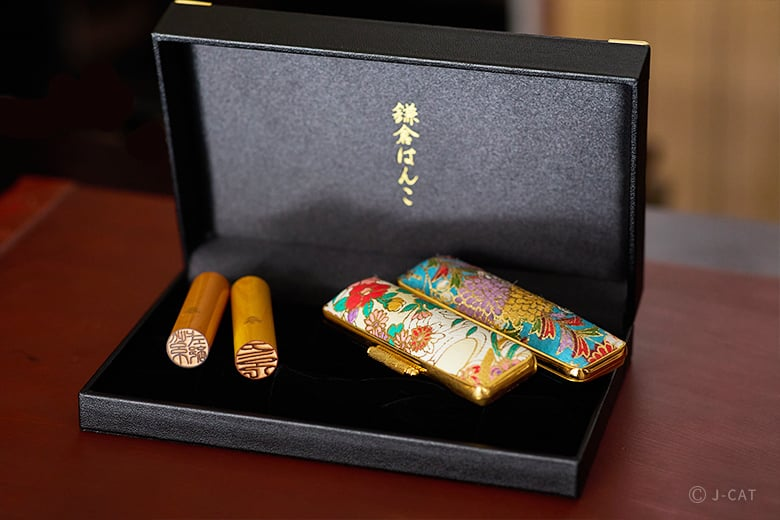
A hanko (判子) is a personal name stamp used in Japan in place of, or alongside, a handwritten signature. It is also called an inkan (印鑑), and the two terms are used almost interchangeably in everyday speech, though “inkan” sometimes refers specifically to a registered stamp.
There are three main types foreigners tend to encounter:
- Mitome-in — an everyday, unregistered stamp used for low-stakes documents like package deliveries or internal office paperwork. Inexpensive and widely available.
- Ginko-in — a bank stamp registered with your financial institution. Required to open certain types of accounts at traditional Japanese banks.
- Jitsu-in — a formally registered stamp filed with your local municipal office (city hall or ward office). Required for major legal transactions such as buying property, registering a vehicle, or signing certain contracts.
For most foreigners, especially new residents, a mitome-in or ginko-in is the starting point. The jitsu-in becomes relevant once you’re deeper into life in Japan—signing a lease directly, buying a car, or dealing with certain residency paperwork.
One more term worth knowing: hanko-ya (判子屋) is simply the word for a hanko shop.
Where You’ll Encounter This in Japan
Foreigners run into hanko requirements more often than they expect, and usually at the worst possible moment—when they’re already sitting across from a bank clerk or a landlord’s agent.
Here are the most common situations:
Banking. Many regional banks and Japan Post Bank still require a registered bank stamp to open an account. Some larger banks and newer digital banks have moved away from this, but it varies by institution. Do not assume your chosen bank is stamp-free until you confirm.
Housing. Rental contracts in Japan commonly require a hanko. Your real estate agent will usually tell you in advance, but it is worth asking explicitly. Some landlords accept a signature from foreign nationals, but others do not.
Workplace onboarding. Certain companies, especially larger or more traditional ones, ask new employees to register a personal stamp for internal HR paperwork. If you’re joining a Japanese company, check your onboarding checklist early. Speaking of employment—need a reason to stay longer? ComfysCareer can help you explore jobs for foreigners in Japan.
Municipal registration. Registering your address at city hall after moving does not typically require a jitsu-in, but some follow-up procedures (health insurance enrollment, certain benefit applications) may involve stamp-related paperwork.
Package delivery. This is the low-stakes, everyday encounter. A delivery driver hands you a slip and asks for your hanko. A mitome-in or even a cheap 100-yen shop stamp works here.
A common foreigner mistake: showing up to a bank appointment thinking a signature will be accepted, only to be turned away because they don’t have a registered stamp. Always confirm in advance.
How to Participate Respectfully
Whether you’re buying in-store or ordering online, there are a few things to understand about how hanko culture works—and how foreigners fit into it.
Your name matters. Traditional hanko are carved with Japanese characters (kanji or katakana). If your name does not have a standard kanji rendering, katakana is the normal approach. For example, “Sarah” might become サラ, and “Marcus” might become マーカス. Some shops in larger cities, and most English-friendly online services, will help you choose an appropriate rendering.
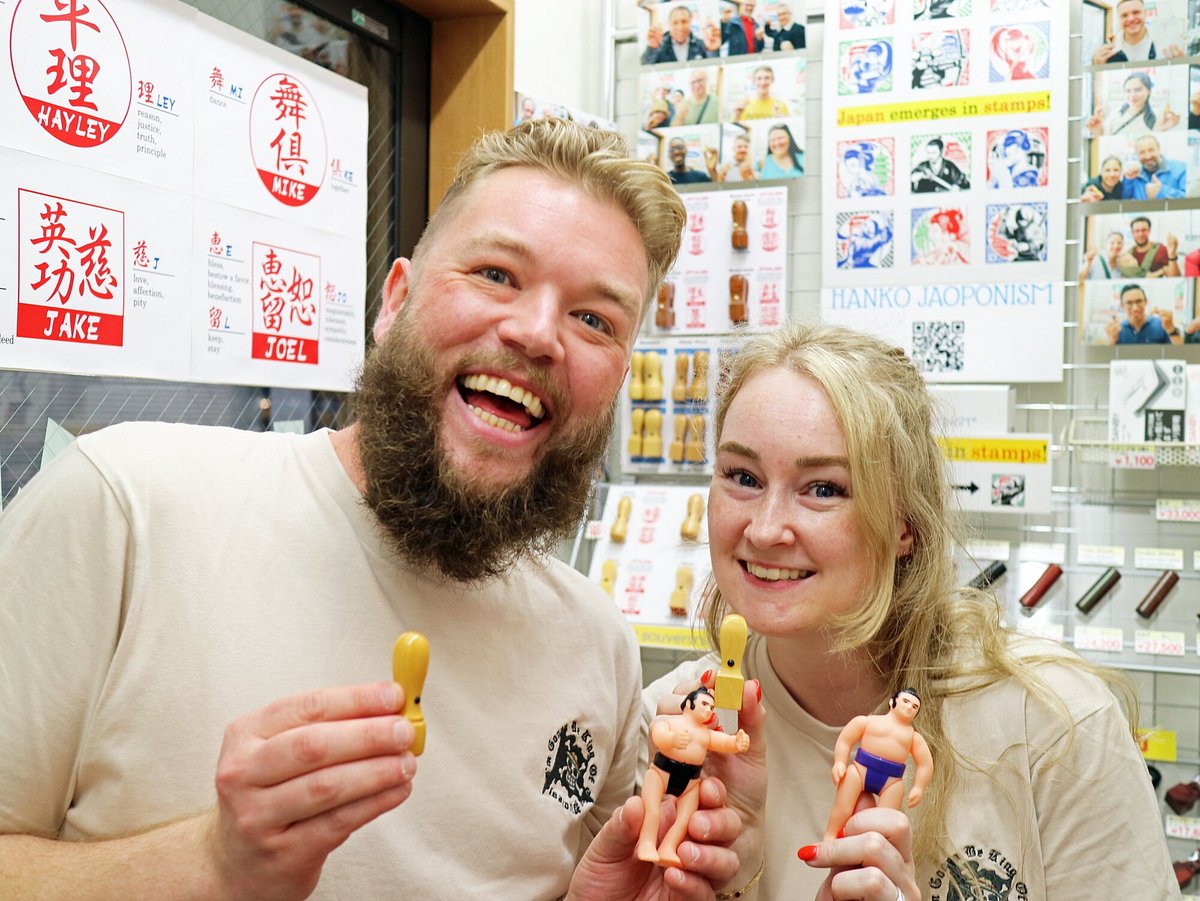
In-store etiquette. A hanko-ya is usually a small, quiet shop. The staff will ask for your name and help you select a script style, material, and size. You do not need Japanese fluency to navigate this, but it helps to have your name written down in katakana beforehand. A quick search or a Japanese-speaking friend can sort this out in minutes.
Common mistakes foreigners make:
- Buying a pre-made stamp with a Japanese surname (like 田中 or 鈴木) from a convenience store or 100-yen shop. These are technically valid for package deliveries but are not accepted by banks or for official registration.
- Ordering the wrong size. Bank stamps typically require a specific diameter—often around 13.5mm to 15mm. Check with your bank before ordering.
- Not keeping a record of your stamp. If you register a hanko at city hall or a bank and later lose it, the de-registration process takes time. Store yours carefully.
- Assuming all shops speak English. Outside of major tourist areas in Tokyo, Osaka, or Kyoto, inkan shop English support is rare. Online ordering in English removes this friction entirely.
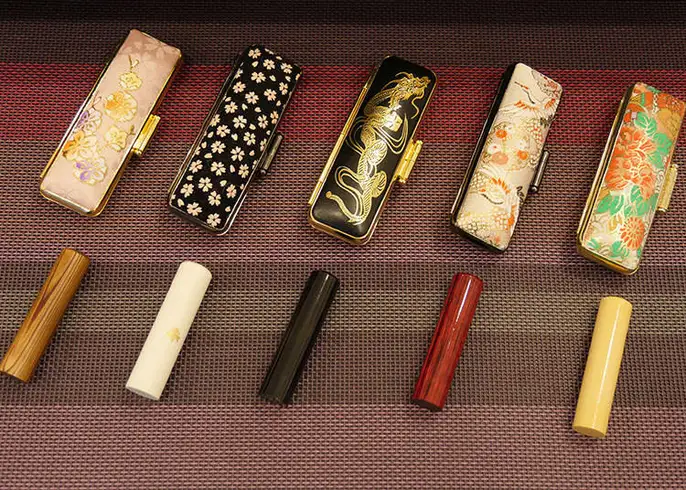
Choosing your material. Entry-level hanko are made from plastic resin. Mid-range options use wood (such as cherry or bamboo). Higher-end stamps use materials like buffalo horn, titanium, or natural stone. For a jitsu-in or ginko-in, something more durable than basic plastic is worth considering.
Souvenir and Value Angle
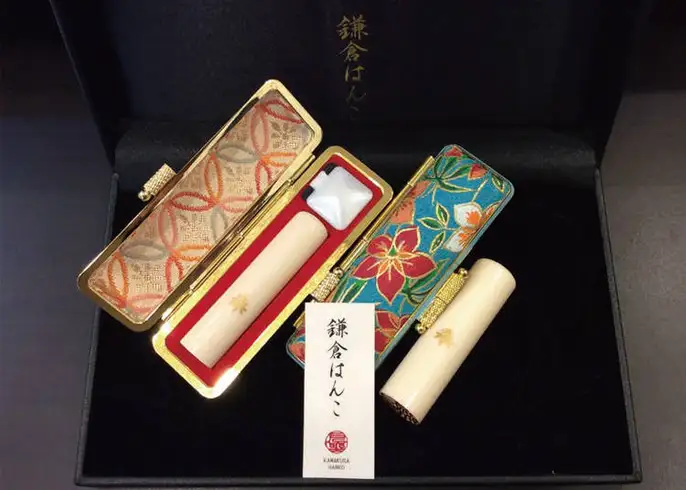
Not everyone buying a hanko in Japan is doing it for bureaucratic reasons. A growing number of visitors want one simply because it’s a beautiful, personal object with deep cultural roots—a meaningful souvenir that actually has your name on it.
This is a completely valid reason to get one, and the hanko-ya experience is worth having at least once if you’re in Japan. Watching a craftsperson carve your name into stone or wood in a traditional script is genuinely memorable. Some shops in tourist-heavy areas—particularly in Kyoto’s older districts or in Tokyo’s Asakusa neighborhood—cater specifically to this kind of visitor and can produce a stamp in under an hour.
For the souvenir buyer, the in-store experience has real charm. For the resident or long-term visitor, however, convenience and accuracy matter more.
In-store vs. online: how they compare
| In-Store | Online (e.g., HankoHub) | |
|---|---|---|
| Cost | Varies widely; budget shops from ¥1,000–¥3,000, artisan shops ¥5,000–¥20,000+ | Transparent pricing, often competitive |
| Speed | Same-day to a few days depending on shop | Typically ships within a few business days |
| English support | Limited outside tourist zones | Full English ordering process |
| Name accuracy | Dependent on staff knowledge | Reviewed before production |
| Customisation | Good in person | Excellent; more script and material options online |
If you want the cultural experience and you’re already in Japan, visit a hanko-ya. If you want reliability, English support, and a custom name stamp Japan residents can actually use for official purposes, ordering online from HankoHub is the smarter move.
HankoHub handles the name rendering, lets you choose your material and style, and ships directly to you—in Japan or internationally. No language barrier, no guesswork about whether your katakana is correct.
FAQ
Can foreigners get a hanko in Japan with their foreign name? Yes. Most custom hanko shops will render foreign names in katakana. Some can also do romaji (Latin letters) for decorative or souvenir purposes, though katakana is standard for official use.
Do I need a hanko to open a bank account in Japan? It depends on the bank. Some major banks and most digital banks (like Rakuten Bank or PayPay Bank) now accept a signature. Japan Post Bank and many regional banks still require a registered stamp. Always confirm with your specific branch before your appointment.
How much does a hanko cost in Japan? A basic mitome-in from a shop or 100-yen store can cost as little as ¥100–¥500. A properly made custom stamp for banking or official use typically runs ¥1,500–¥5,000 at a standard hanko shop, and higher at artisan or tourist-area shops. Material and script style affect the price significantly.
Is there a difference between hanko and inkan? In everyday usage, not much. “Hanko” is the more casual, commonly used term. “Inkan” appears more often in formal or official contexts (e.g., 印鑑登録, inkan toroku, meaning hanko registration). Both refer to the same object.
Can I order a hanko online if I’m not in Japan yet? Yes. HankoHub ships internationally, so you can order before your arrival and have it ready when you land. This is especially useful if you have a bank appointment or housing contract lined up early in your stay.
What size hanko do I need for official use? For a jitsu-in (registered stamp), regulations vary slightly by municipality but most require a stamp face between 8mm and 25mm, with the most common sizes being 13.5mm and 15mm. For a ginko-in, check with your bank. When in doubt, 13.5mm is a safe starting point for most adult use.
Does a digital hanko work for everything? No. Digital hanko (electronic stamp images used in PDFs or digital workflows) are common in some modern Japanese workplaces for internal documents, but they are not accepted for legal registration, bank applications, or official government procedures. For anything official, you still need a physical stamp.
Next Steps
If you’re arriving in Japan soon, or you’re already here and realising you need a stamp for your bank, your landlord, or your new employer, don’t wait until you’re sitting in an office without one. The fastest, most reliable way to get a custom name stamp Japan residents can actually use is to order directly through HankoHub. The process is in English, the name rendering is handled for you, and you can choose the material and style that fits your situation—whether that’s a practical everyday stamp or something you’ll keep for years.